
Decompression and traction therapy are common non-surgical treatments. They are used to alleviate pain and discomfort in the spine and joints. These therapies may be particularly beneficial for individuals suffering from conditions such as herniated discs, sciatica, or degenerative disc disease. In this overview, we’ll explore the principles behind each therapy, their benefits, and what patients can expect during treatment.

What is Decompression Therapy?
Decompression therapy involves reducing pressure on the spinal discs and nerves. This is achieved through a mechanical process that gently stretches the spine. The primary goal is to create negative pressure within the disc, encouraging the retraction or repositioning of herniated or bulging discs. This can also promote the flow of nutrients, water, and oxygen into the discs, which aids in their healing.
Benefits of Decompression Therapy
- Pain Relief: Effective in reducing chronic back pain and neck pain.
- Improved Healing: Enhances the natural healing process by increasing circulation to the affected area.
- Non-Invasive: Provides a non-surgical option for treating disc-related issues.
- Increased Mobility: Can help restore normal function and range of motion.
What is Traction Therapy?
Traction therapy is a broad term that refers to the application of a pulling force to the spine or limbs to relieve pressure and improve alignment. This can be done manually by a therapist or through the use of mechanical devices. Traction therapy is often used to treat conditions like spinal stenosis, pinched nerves, and muscle spasms.
Types of Traction Therapy
- Manual Traction: A therapist uses their hands to apply force and stretch the spine or joints.
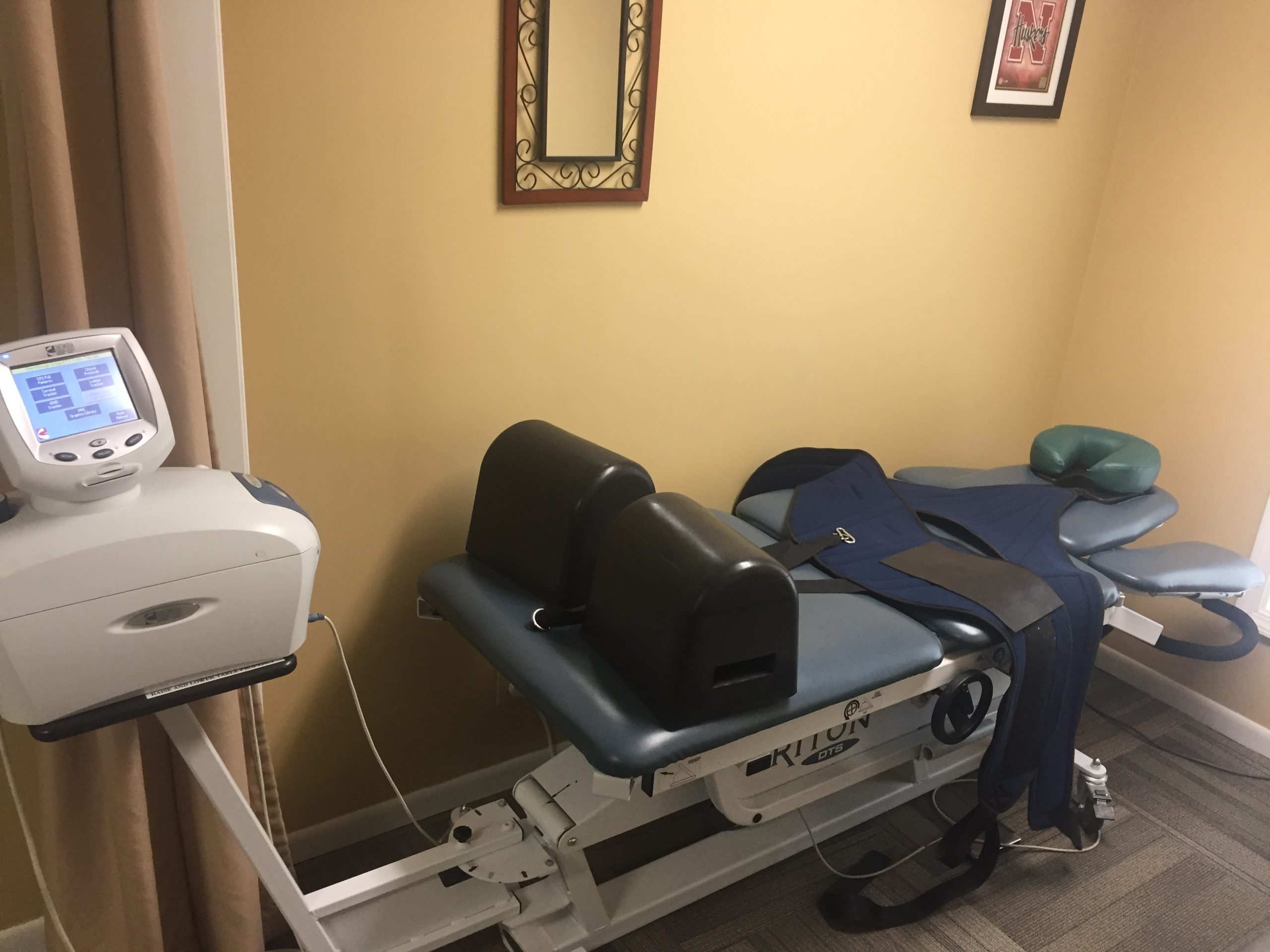
- Mechanical Traction: Uses a machine to apply a controlled pulling force. Often while the patient lies on a table.
- Over-the-Door Traction: A simple device that uses weights and pulleys to apply force, typically used for cervical spine issues.
Benefits of Traction Therapy
- Reduces Pressure: Alleviates pressure on affected nerves and discs.
- Promotes Relaxation: Helps to ease muscle tension and spasms.
- Improves Alignment: Aids in correcting misalignments of the spine or joints.
- Customizable: Can be adjusted to meet the specific needs of the patient.
What to Expect During Treatment
Both decompression and traction therapies are typically comfortable and relaxing. Sessions usually last between 20 to 30 minutes, depending on the treatment plan. Patients may experience immediate relief, although multiple sessions are often necessary for optimal results. It’s important that these therapies are performed under the guidance of a trained healthcare professional to ensure safety and effectiveness.
Conclusion
Decompression and traction therapies offer promising non-surgical options for individuals dealing with spine and joint issues. By understanding these treatments and working closely with healthcare providers, patients can explore effective ways to manage pain and improve their quality of life. Always consult with a medical professional to determine the best treatment plan for your specific condition. These are few of the therapies offered in our office to go with chiropractic care. We take a more wholistic approach to help you achieve your goals. If you have questions, feel free to reach out us at info@fletcherchiropracticllc.com or 402.261.5766. Furthermore, You can also find more information on our website at www.fletcherchiropracticllc.com.